
In April 1862, the Western & Atlantic Railroad was a military artery between Atlanta and Chattanooga, moving troops, food, ammunition, and orders through north Georgia. Cut that line, and the Confederate position around Chattanooga could be thrown into trouble fast. That was the point of Andrews’ Raid. It was sabotage by steam engine and a strike at the machinery that kept armies alive.
James J. Andrews, a Kentucky civilian scout working with Union forces, recruited 22 Union soldiers and another civilian, William Campbell, for a bold plan with very little margin for error. The men moved south in civilian clothes, traveling in small groups so they would not attract attention. If captured, their clothes could turn a failed raid into a spy trial and a rope. That was the actual risk.
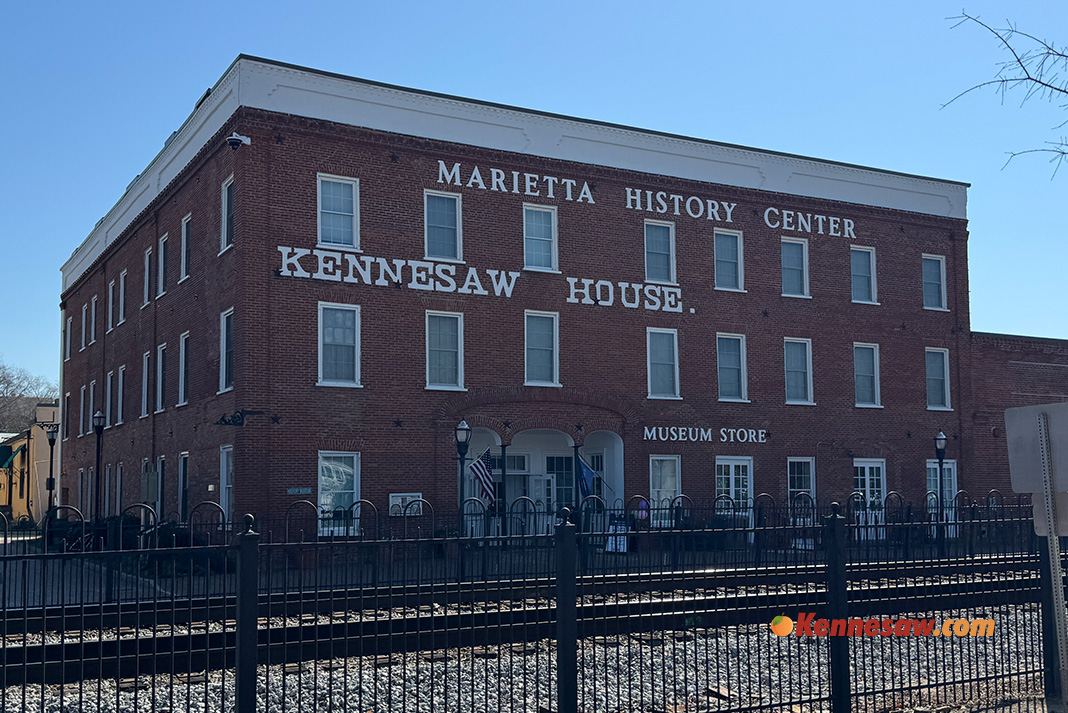
Marietta was the staging ground. On the night before the raid, Andrews and his men stayed in town, most at the Fletcher House and others at Cole’s Marietta Hotel. Early the next morning, they met in Andrews’ room, walked to Marietta Station, and boarded the northbound train. The Fletcher House is now the Kennesaw House, home of the Marietta History Center, where the Andrews’ Raiders Room illustrates the plot from hotel-room planning to railroad mayhem.
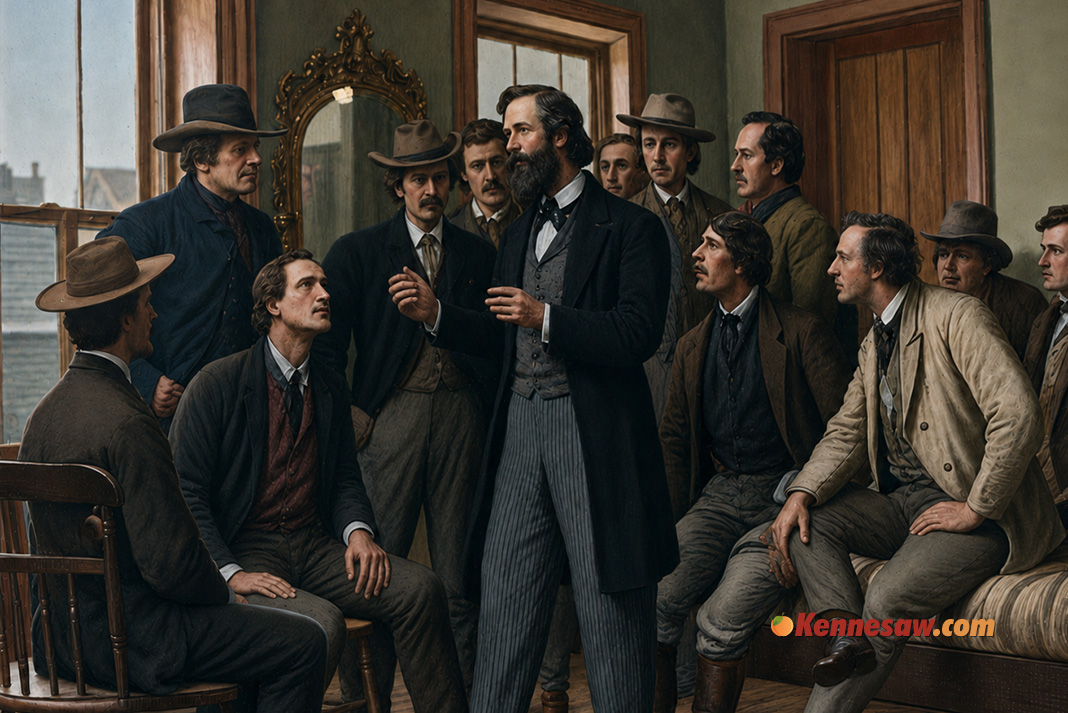
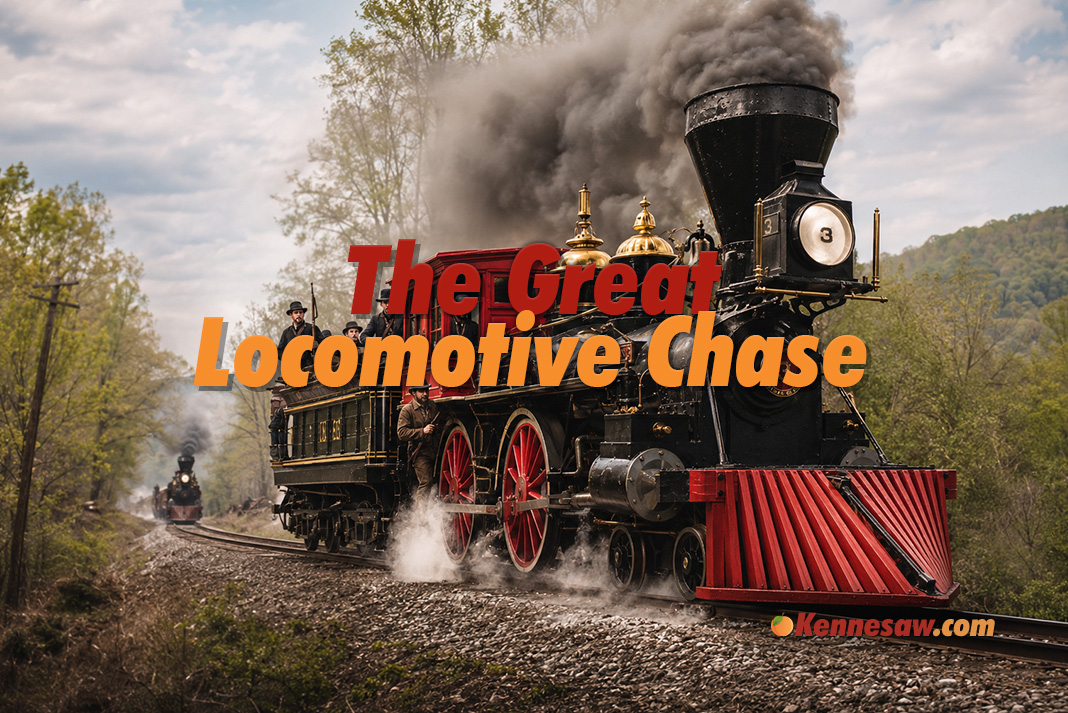
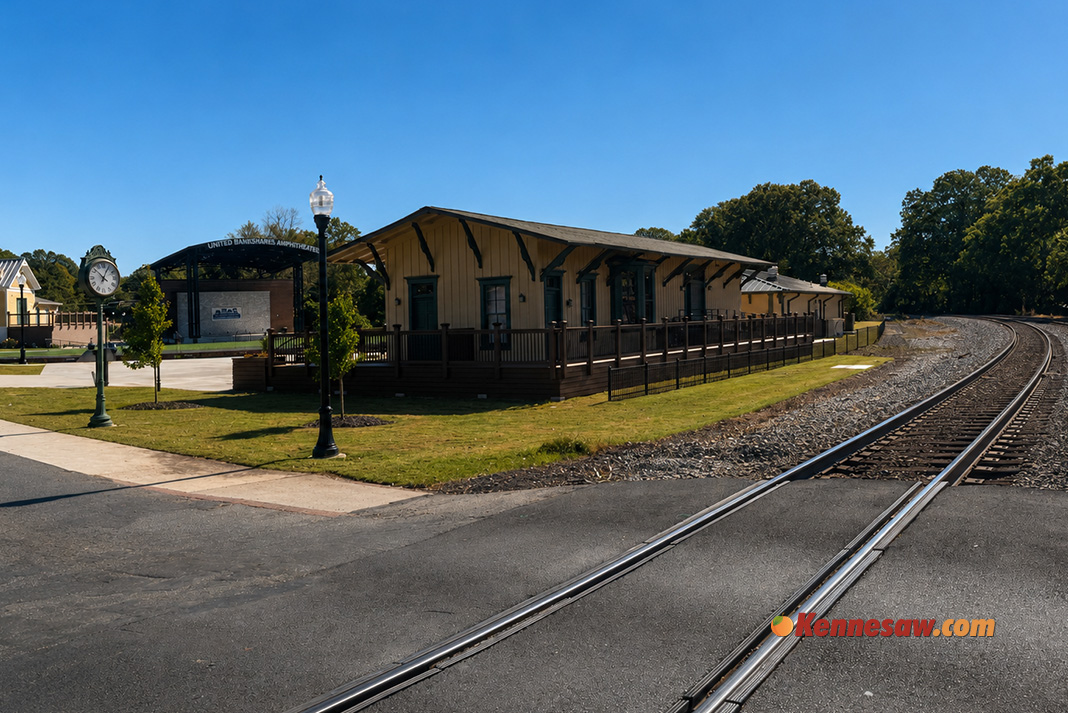
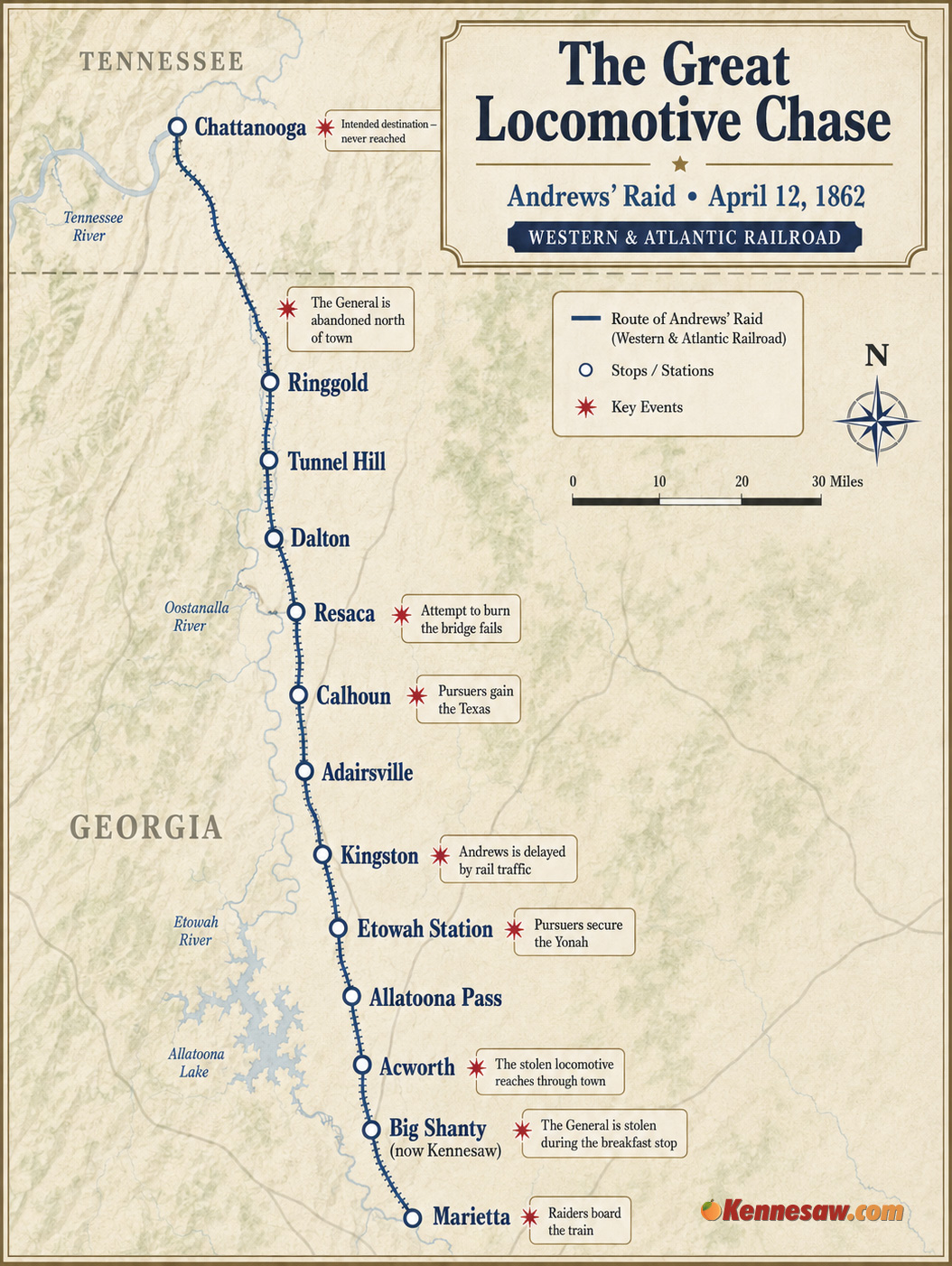
The raiders rode from Marietta to Big Shanty, now Kennesaw. That stop was chosen for a reason. The Kennesaw station had no telegraph office. A stolen train could get moving before word could be sent up the line. When the passengers and crew went for breakfast, Andrews and his men uncoupled the passenger cars, took The General, its tender, and three boxcars, then opened the throttle north. It was bold, fast, and slightly insane, which is one reason people still talk about it.
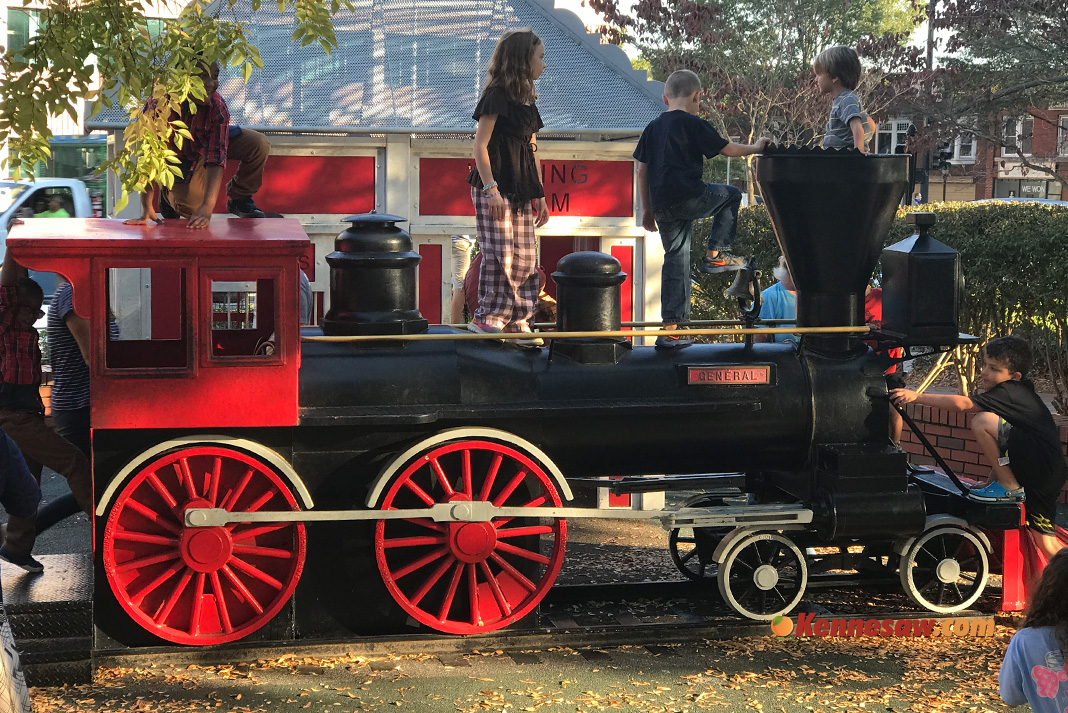
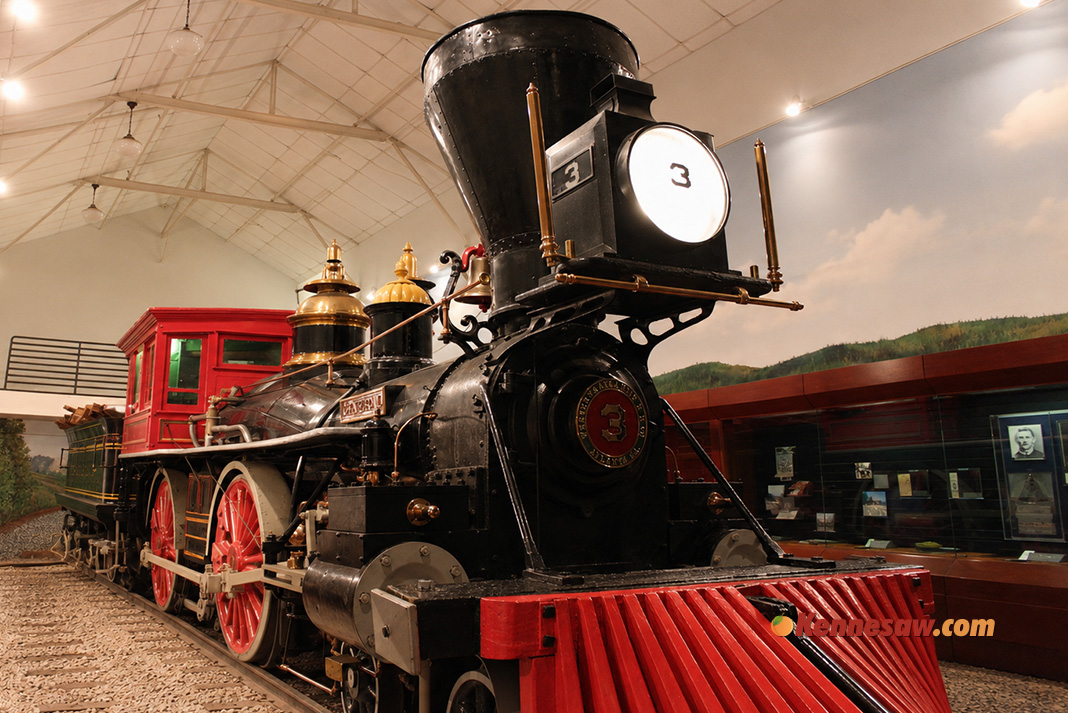
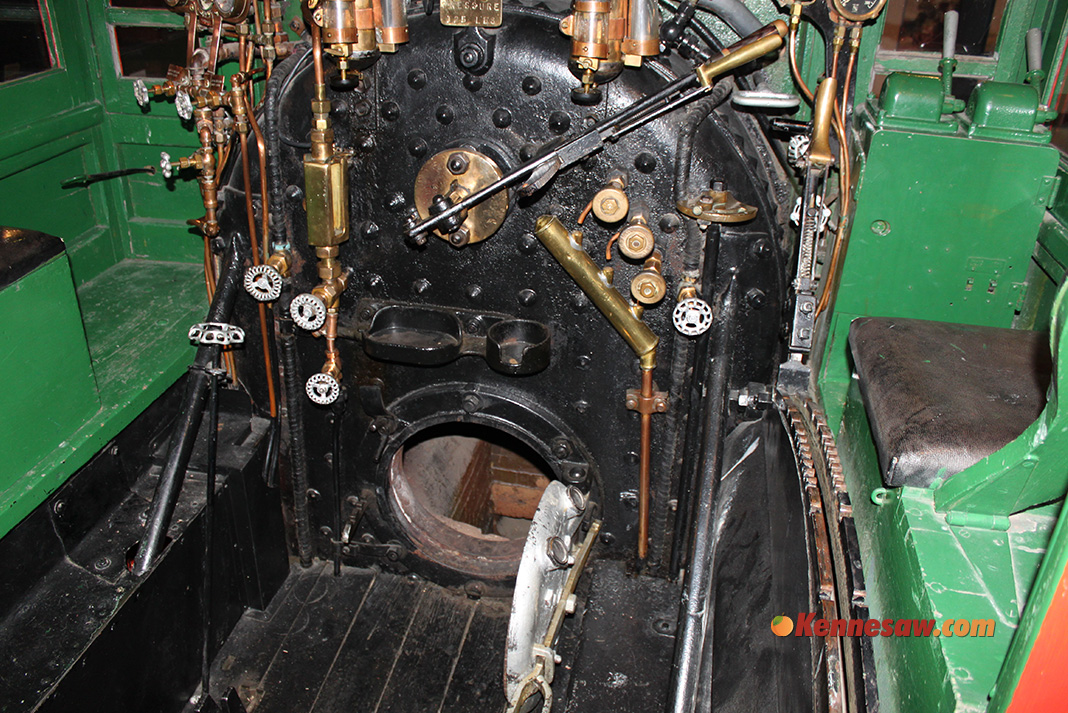
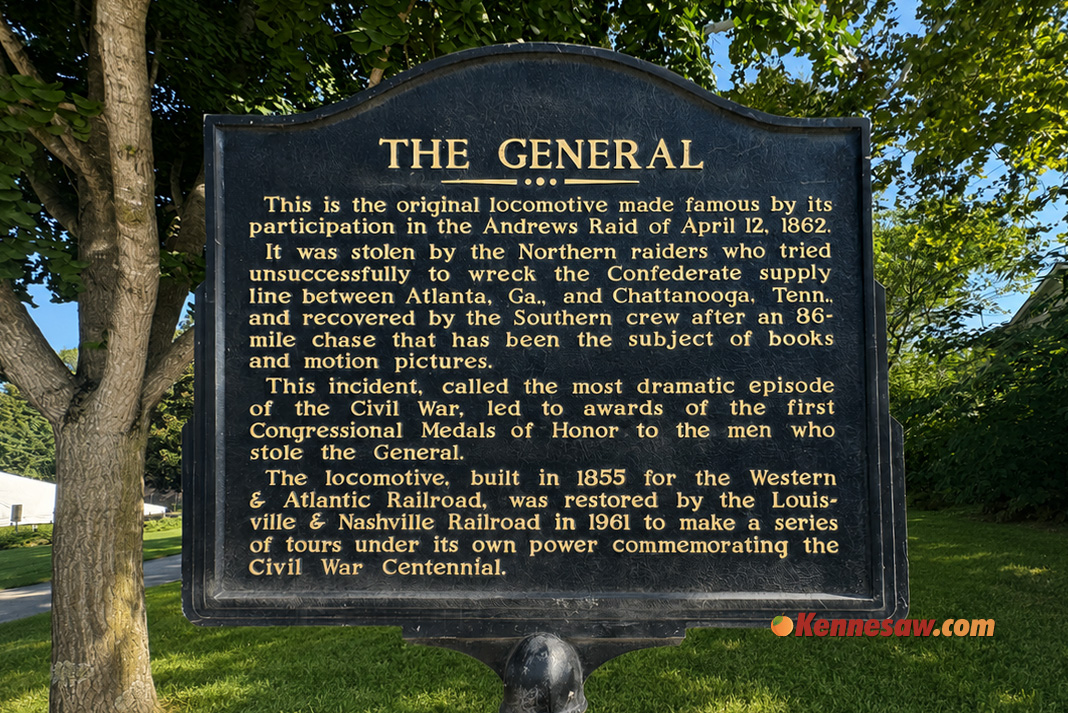
The General was a real piece of railroad muscle. The locomotive was built in 1855 in Paterson, New Jersey, by Rogers, Ketchum, and Grosvenor for the Western & Atlantic Railroad. It was a 4-4-0 American-type engine, weighed about 50,300 pounds with its tender. Before the war it hauled passengers and freight. During the war, it moved troops and equipment. On April 12, 1862, it became the stolen lead actor in one of the wildest chases in American railroad history.
Conductor William Fuller did not pause to admire the audacity. He chased. First on foot. Then by handcar. Then by locomotive after locomotive as the pursuit moved north. Andrews’ men cut telegraph wires, tried to damage track, and dropped boxcars to slow the men behind them. Fuller kept closing. The whole affair lasted about seven hours and covered nearly 90 miles, which is a long time to be hunted by a furious railroad man who missed breakfast and lost his engine.
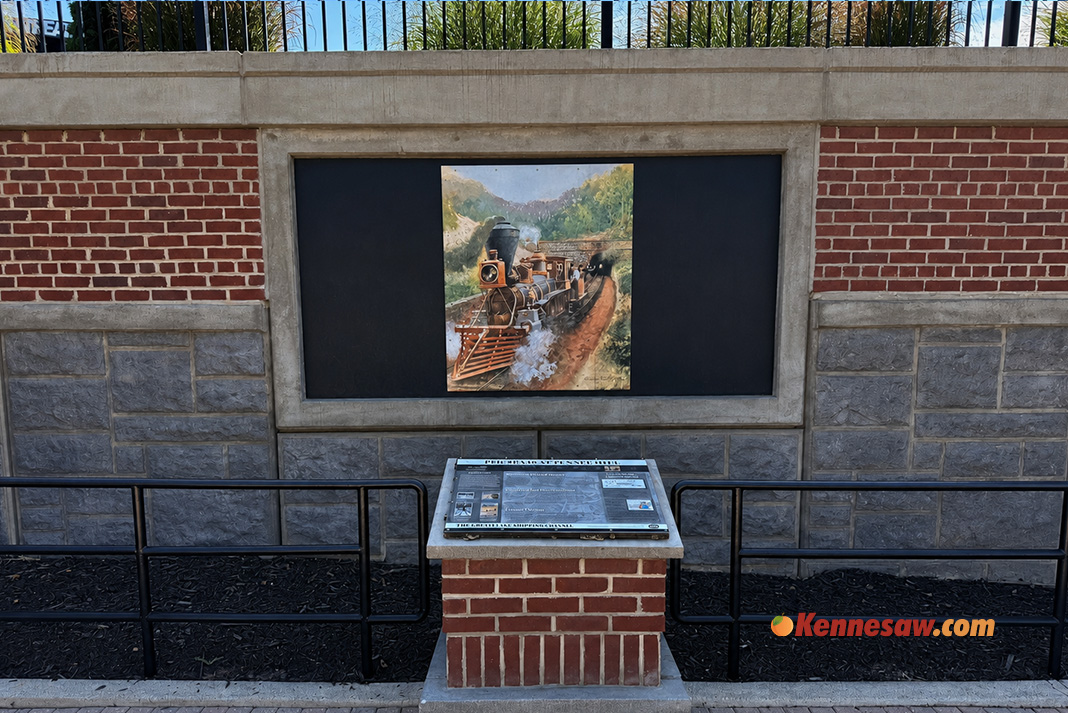
The stolen train raced north through Acworth, adding the city to one of the most unusual Civil War stories in north Georgia. For a few minutes, the war did not arrive in Acworth as a formation of soldiers. It arrived as smoke, wheels, alarm, and a locomotive running with the wrong crew. From there, the day grew worse for the raiders.
The raiders needed time, fuel, water, and luck. They got some of each, but never enough.
At Etowah Station near Cartersville, the pursuers gained access to a locomotive named Yonah, the first of several used that day. The raiders uncoupled boxcars to slow the pursuit, but the delays failed to break Fuller’s momentum.
The raid started to unravel at Kingston. Southbound trains clogged the single-track line, and Andrews had to wait. The delay gave Fuller the gift every pursuer wants, more time. From there, the raiders never built enough distance. Fuller’s pursuit continued through a relay of engines, including the Texas in Calhoun, which famously ran in reverse during part of the chase. Andrews still had The General, but the day was no longer his.
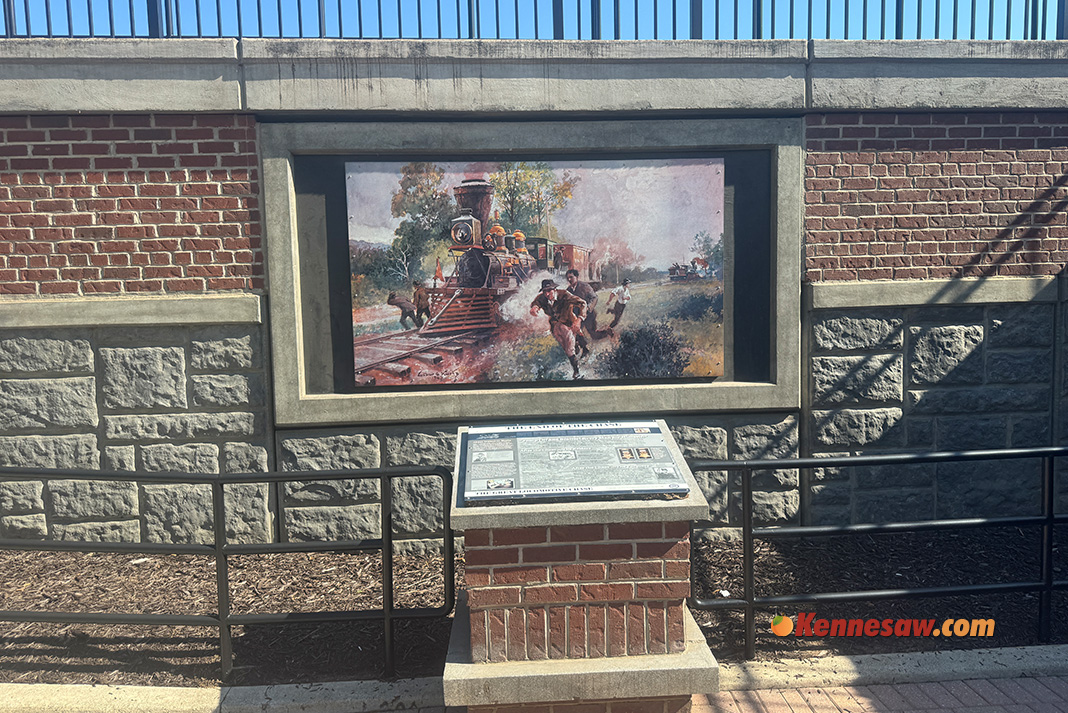
Rain made bridge burning nearly impossible. Track sabotage took time the raiders did not have. Near Resaca, an attempt to burn the Oostanaula River bridge failed. The telegraph cuts caused trouble, but not enough. By early afternoon, north of Ringgold and short of Chattanooga, The General ran out of steam. The raiders scattered into the countryside. Confederate pursuers captured them all.
The military result was failure. The Western & Atlantic was not crippled for long, Chattanooga did not fall to Union forces that year, and the raiders paid heavily. Andrews and seven others were hanged. Others escaped or were exchanged. The raid later became central to the earliest history of the Medal of Honor. Six raiders received the first Medals of Honor on March 25, 1863, and 21 of the 24 participants eventually received the award. Andrews and Campbell were civilians, so they were not eligible.
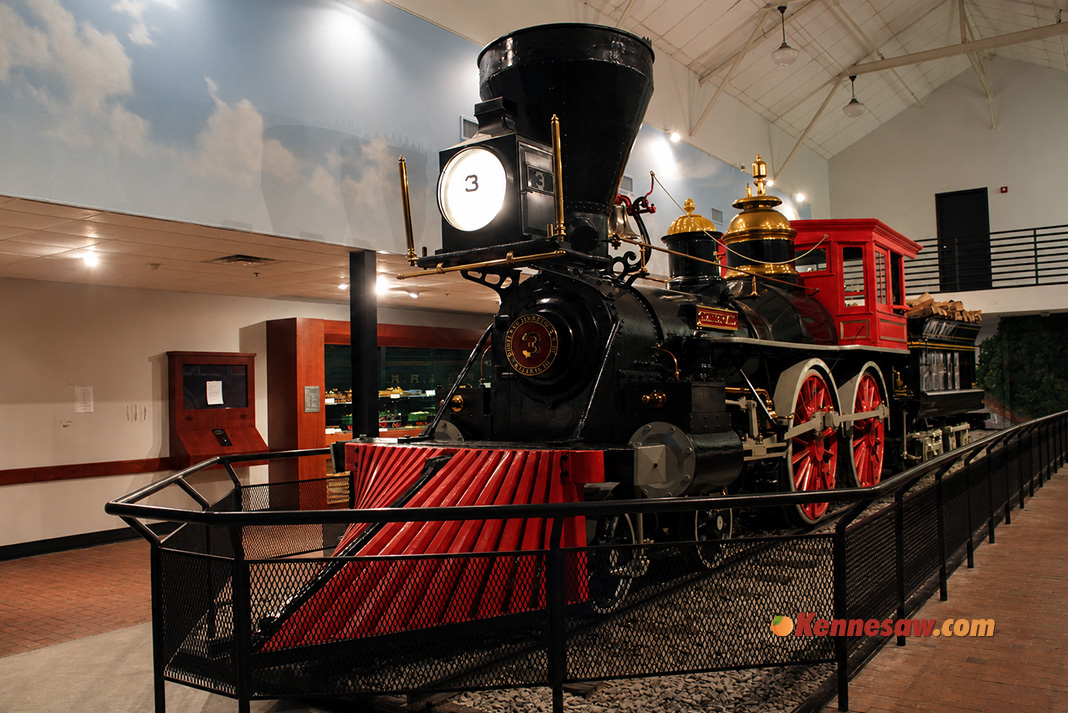
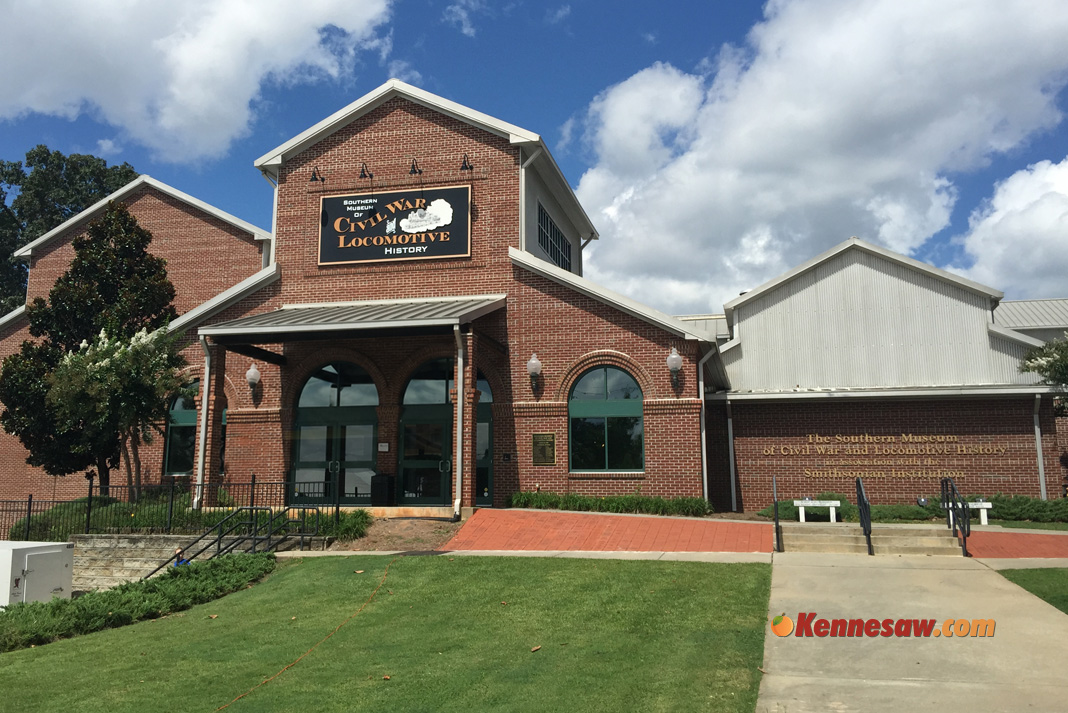
Today, The General is back here in Kennesaw, a few hundred yards from the place where it was stolen, on display at the Smithsonian affiliated Southern Museum of Civil War & Locomotive History. The chase failed as sabotage, but as a story it has everything, including war, spies, bad timing, missed breakfast, rain, speed, panic, and a locomotive that once helped start a seven-hour railroad brawl across north Georgia.
What happened to The General after The Great Locomotive Chase?
The General survived its famous theft, then lived long enough to become the prize in a second chase, fought with lawyers, railroad executives, local officials, and a few automobiles parked across the tracks.
The Great Locomotive Chase was not the end of the locomotive. The General was recovered and returned to railroad duty. The raid made it famous later, but at the time it was still a machine needed by a railroad and an army. It went back to hauling, pulling, and grinding through the Western Theater of the Civil War on the Western & Atlantic line.
The war did more damage to The General than the chase did. During the Atlanta Campaign, the locomotive was used in military transport. In September 1864, during the Confederate evacuation of Atlanta, an ammunition train exploded and badly damaged the engine. The most famous locomotive in Georgia had survived a theft, a pursuit, and abandonment, then got hammered by the less poetic side of war, exploding ordnance and railroad chaos.
After the war, The General was repaired and altered. By 1871, it had gone through major changes at the Western & Atlantic shops in Atlanta. It was converted from wood to coal, received a diamond stack, and lost some of the features seen during the 1862 chase. The General seen in later photographs and displays was not a perfectly frozen 1862 object. It was a railroad engine that had been rebuilt, renumbered, modernized, and patched because railroads did not retire machinery for sentiment.
The locomotive also changed identity on paper. Before the war, many Southern locomotives were known by name. After the war, railroad numbering became more standard. The General became Western & Atlantic No. 39 in the 1860s, then later No. 3. The name survived because the story survived. Numbers are efficient. Names are what people remember.
By the late 1880s, The General had aged out of regular railroad use. Bigger locomotives had arrived, and the little wartime engine no longer fit the needs of a changing railroad. By 1891, it was stored on a side track at Vinings station and listed as condemned. On a balance sheet, it was nearly finished. In the public imagination, it was about to start its second life.
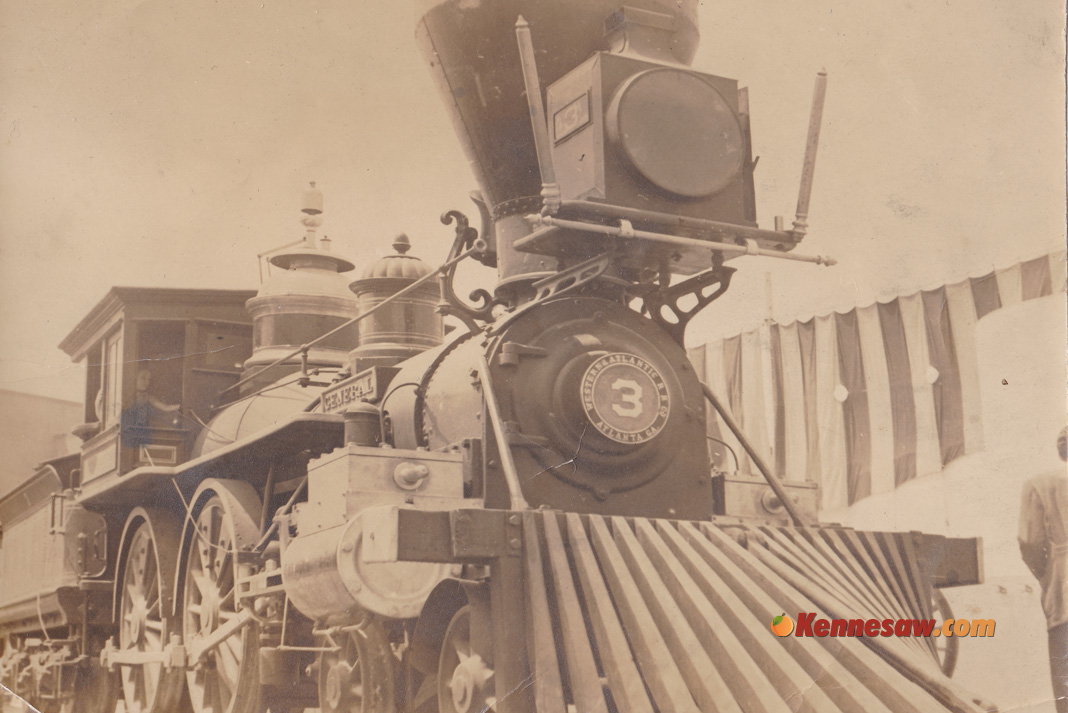
Shortly thereafter, a professional photographer named E. Warren Clark discovered the rusting train in Vinings, and even though it had a new appearance and a number rather than name, he knew it was the famous General. His discovery led to the locomotive being restored by the Nashville, Chattanooga & St. Louis Railway and showcased at the 1893 Chicago World’s Fair. The engine had become a relic with a following. People wanted to see the machine Andrews stole, the machine Fuller chased, the machine connected to a story that sounded almost too reckless to be real.
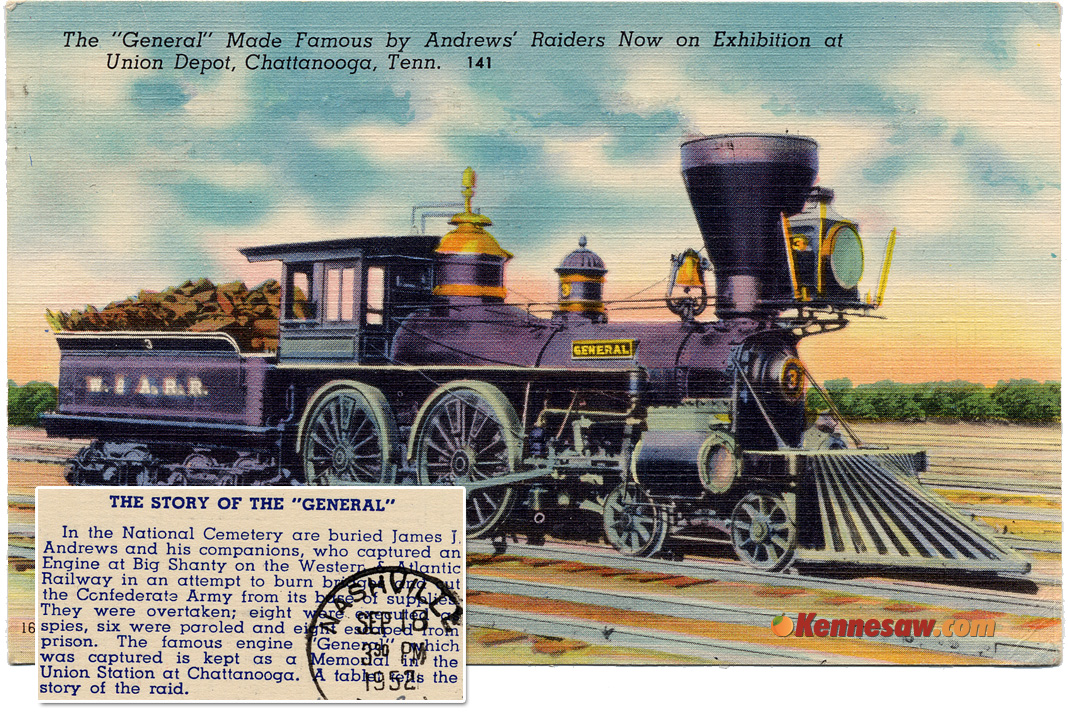
In the National Cemetery are buried James J. Andrews and his companions, who captured an Engine at Big Shanty on the Western & Atlantic Railway in an attempt to burn bridges and out the Confederate Army from its base of supplies. They were overtaken; eight were executed as spies, six were paroled and eight escaped from prison. The famous engine “General” which was captured is kept as a Memorial in the Union Station at Chattanooga. A table tells the story of the raid.
On May 16, 1901, The General was moved to a display at Union Station in Chattanooga. Chattanooga embraced it. That made sense. The chase ran toward Chattanooga, the engine had spent decades there, and the city saw it as part of its own Civil War memory. Georgia saw the matter differently. Big Shanty, now Kennesaw, was where the theft happened. The railroad was Georgia’s Western & Atlantic. The locomotive’s origin story, the moment that made it famous, began there.
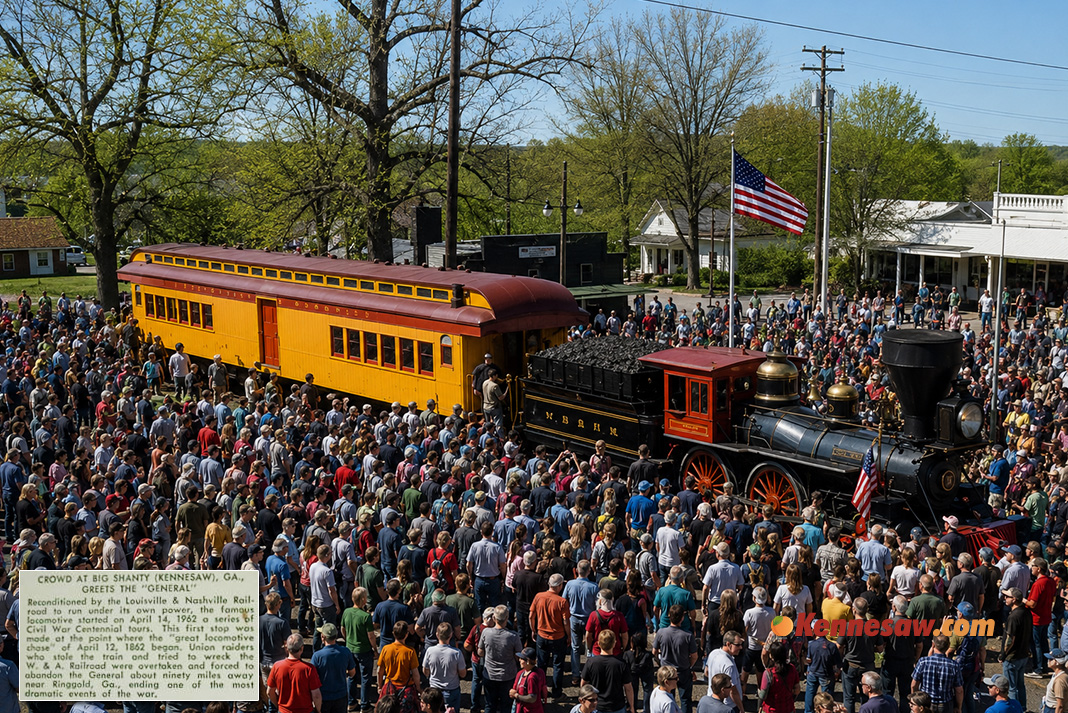
The General’s next move took place during the Civil War centennial. In 1961 and 1962, the Louisville & Nashville Railroad restored it to operating condition. The engine received modern safety changes for the era, including air brakes and oil-burning equipment. On April 14, 1962, it steamed from Atlanta to Chattanooga for the centennial of Andrews’ Raid. Crowds packed the line. The old engine, nearly a century after the chase, was moving again under its own power. That was thought to be its final great performance.
Then came the second chase.
The Louisville & Nashville Railroad had gained control of The General through its acquisition of the Nashville, Chattanooga & St. Louis Railway. L&N planned to send the engine to Georgia, where it would be displayed near the site of the original theft. Chattanooga objected. In 1967, as The General was being moved, Chattanooga officials and supporters blocked the railroad by placing automobiles across the tracks. The engine stolen at Big Shanty in 1862 had been stopped again, this time by civic pride and parked cars.
The dispute went to federal court. Chattanooga argued for keeping the locomotive. L&N argued ownership and control. The courts sided with L&N, clearing the way for The General to return to Georgia. The ruling ended the custody battle, but it also proved how powerful the locomotive’s story had become. Cities were fighting over an old steam engine because it was no longer a machine. It was possession, memory, tourism, and bragging rights bolted to iron wheels.
In 1972, The General returned to Kennesaw. The Big Shanty Museum opened on April 12, 1972, the 110th anniversary of the raid, with The General as its central artifact. That museum later became the Southern Museum of Civil War & Locomotive History.
Today, The General is displayed in Kennesaw near the place where Andrews and his men stole it. It no longer runs. It does not need to. The engine already had enough drama for several lifetimes. It was built for railroad duty, stolen in wartime, chased through North Georgia, damaged in the fall of Atlanta, rebuilt, retired, exhibited, revived, fought over in court, and finally returned to the place where its legend began.