
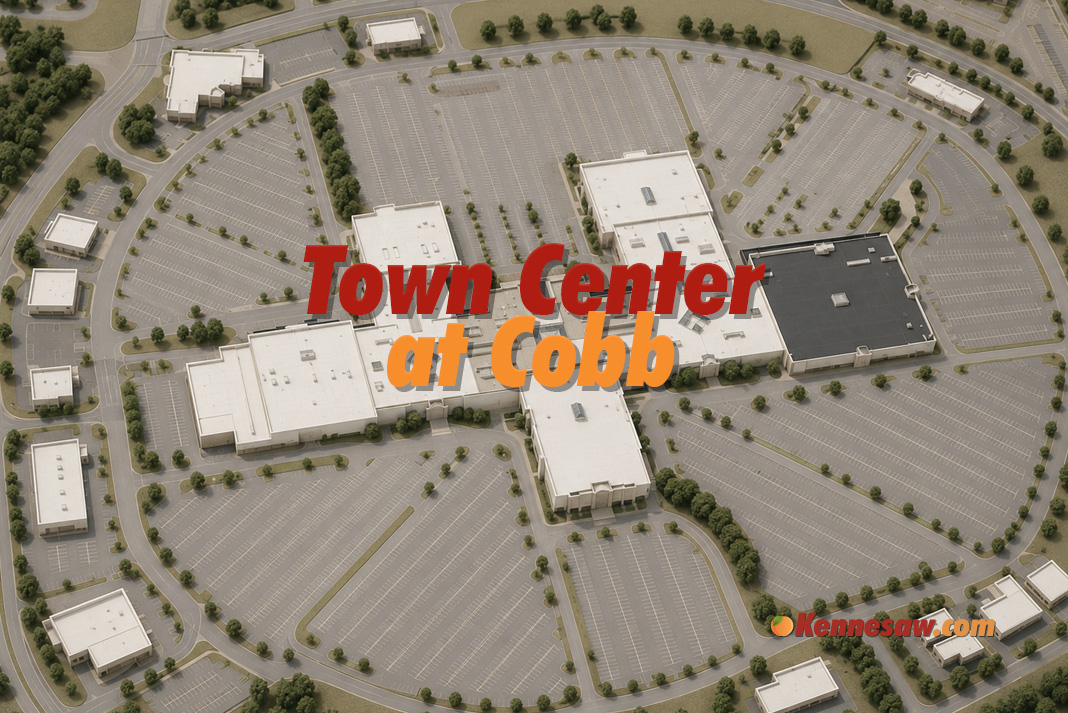
From Barrett Parkway, Town Center at Cobb looks like one enormous property. The mall covers about 92 acres and contains roughly 1.3 million square feet of retail space, but no single company owns the entire site. The central mall, department store anchors, parking areas, and smaller parcels are divided among several owners.
That division became especially important after an affiliate of The Ardent Companies acquired the central mall property through foreclosure in July 2026. Ardent gained control of the mall’s interior corridors, indoor stores, food court, former Belk space, and much of the common parking.
It did not acquire the separately owned Macy’s buildings, JCPenney property, or former Sears space.
Town Center at Cobb is best viewed as five major ownership areas, plus the smaller outparcels, access strips, and easements around the perimeter.
1. The Core Mall Property
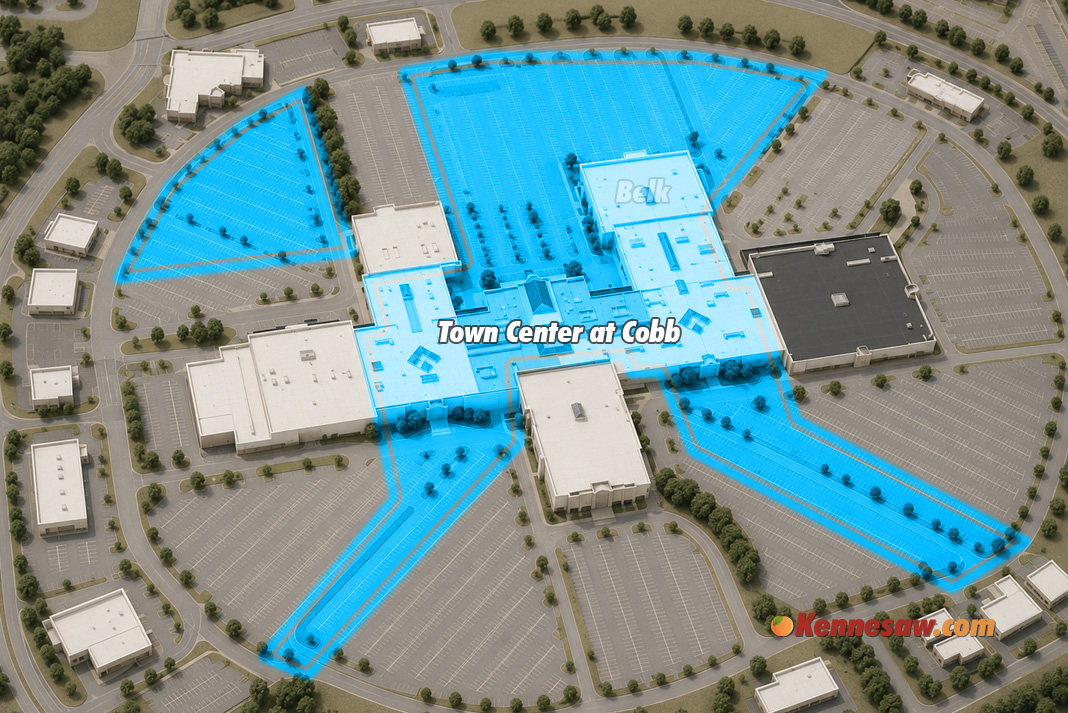
The Ardent Companies controls the central portion of Town Center at Cobb.
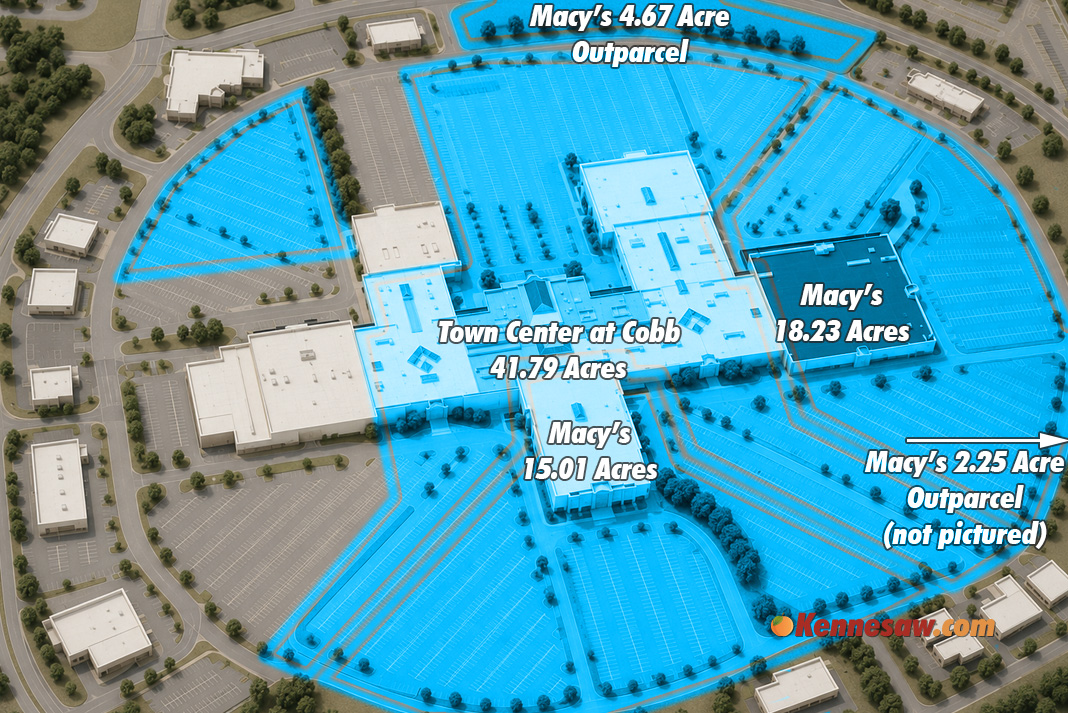
This area includes the enclosed concourses, indoor retail spaces, food court, common areas, former Belk anchor and a large portion of the general parking surrounding the mall. The enclosed retail space involved in the foreclosure covered about 560,000 square feet and the total area including parking is about 41.79 acres.
Belk occupied the north anchor space before closing its Town Center store in February 2025. Because Belk leased its store rather than owning a separate department store parcel, the vacant Belk building remained part of the core mall property acquired by Ardent.
This is the land Ardent can directly lease, renovate, sell, or redevelop. It is also the physical center connecting the independently owned anchor buildings.
2. The Former Sears Property
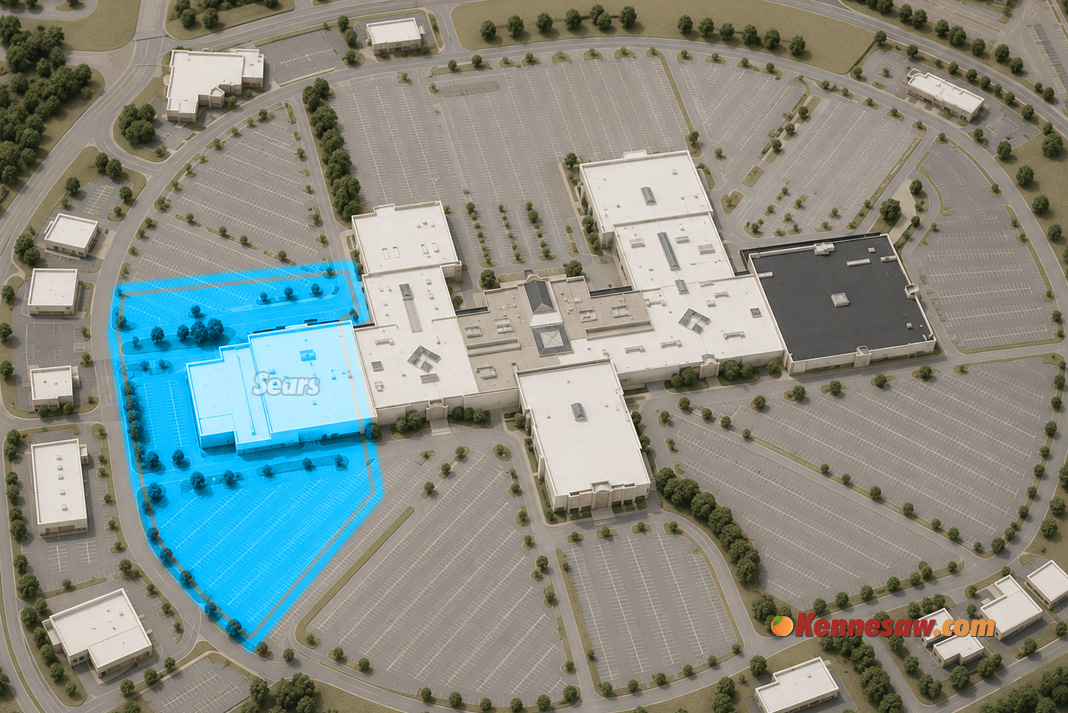
The former Sears spot occupies the 12.89 acre southwest corner of the mall property. It includes the two level former Sears department store, the Auto Center, and the large southwest parking area.
Transformco retained the real estate after Sears closed in August 2020, then sold it to Ernest West Village LLC for $9 million in March 2025. Business records connect Ernest West Village LLC with companies associated with Nam Dae Mun Farmers Market and Kennesaw International Farmers Market.
Because Ernest West Village LLC owns the land separately from Ardent’s mall property, redevelopment there can proceed without Ardent controlling the project. The owners may still need to coordinate on entrances, road access, utilities and other shared systems.
3. The JCPenney Property
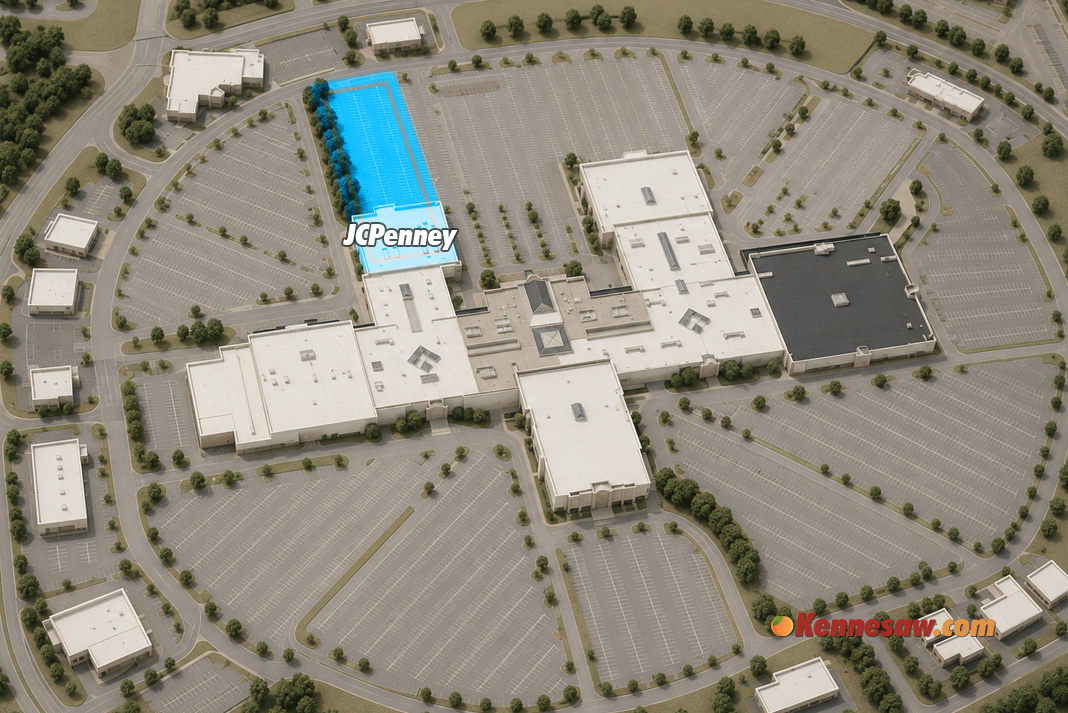
JCPenney controls its department store building and surrounding land on the eastern side of Town Center at Cobb.
The parcel includes the two level store and the parking area, totaling about 5 acres.
JCPenney remained outside the Ardent foreclosure transaction and continues to operate from its independently owned anchor property.
This distinction limits what Ardent can do on the eastern side of the mall. Ardent cannot remove the JCPenney building, redevelop its parking area or redesign the entire side of the property without an agreement involving JCPenney.
The store can also remain open during any major changes to the central mall, provided access and utilities remain available.
4. The Macy’s Main Store Property
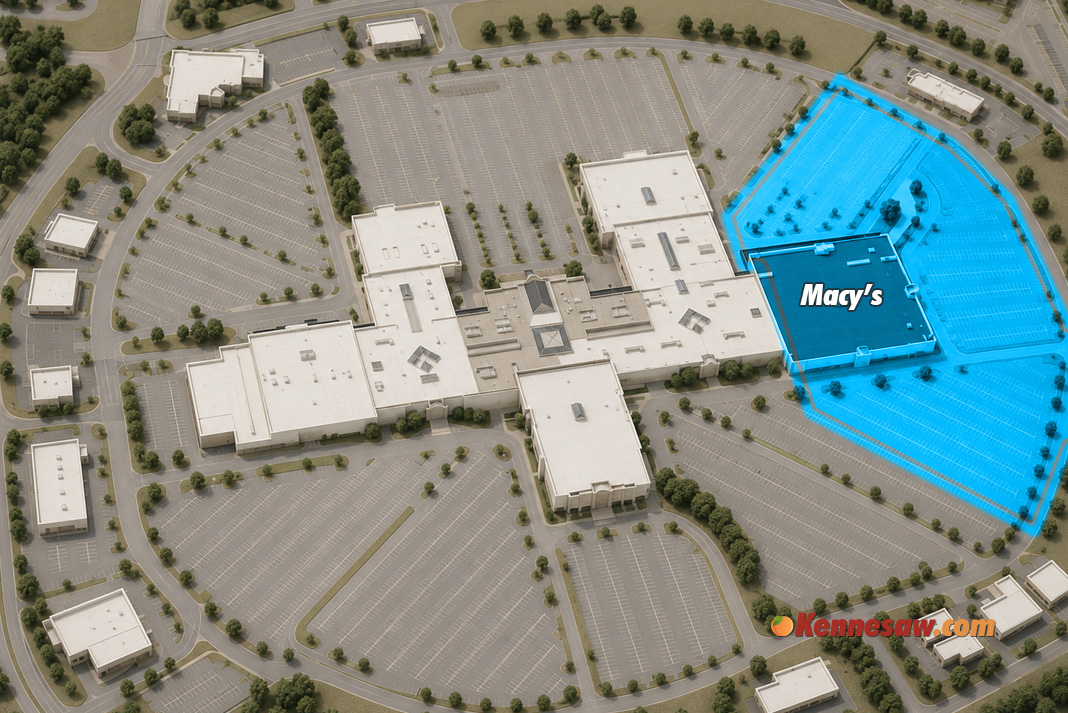
Macy’s owns the main department store parcel on the northwest side of the complex.
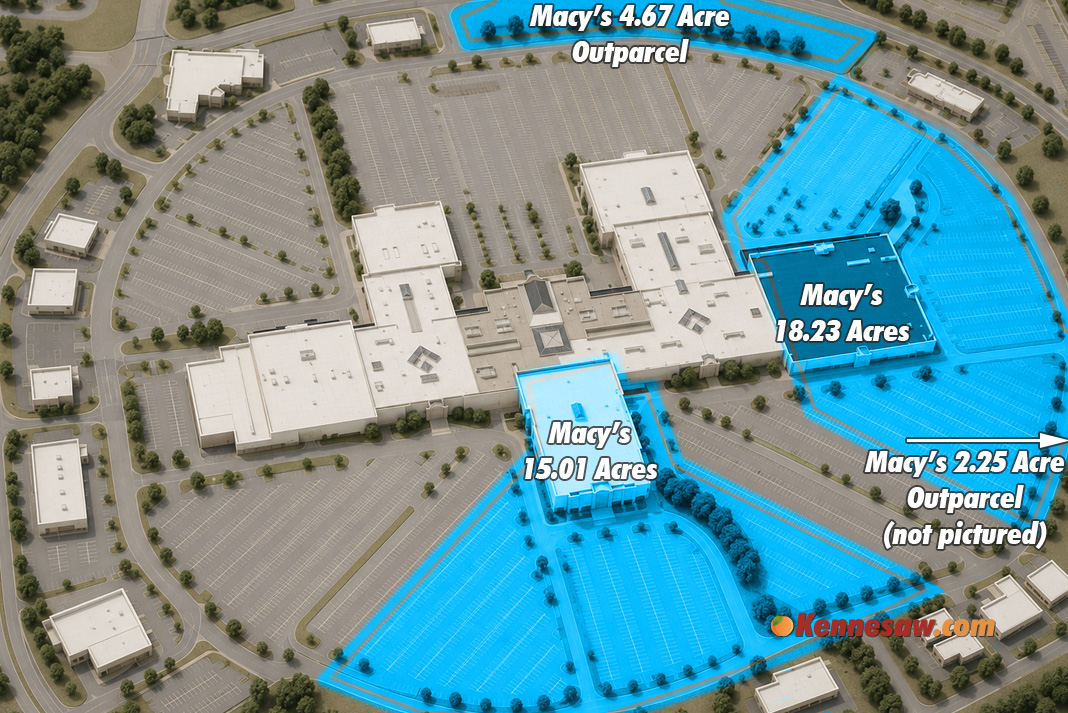
The property includes the two level Macy’s store and its surrounding parking, totaling about 19.3 acres with a few more acres of outparcels just outside Ring Road.
Like JCPenney, Macy’s retained control of its real estate during the sale and foreclosure of the central mall.
That arrangement was common when large regional malls were built. Department store companies frequently owned their anchor buildings and nearby parking while the mall owner controlled the connecting concourses and smaller retail spaces.
Macy’s can continue operating under its own ownership even if Ardent renovates or replaces major sections of the central mall.
5. The Macy’s Men’s and Furniture Property
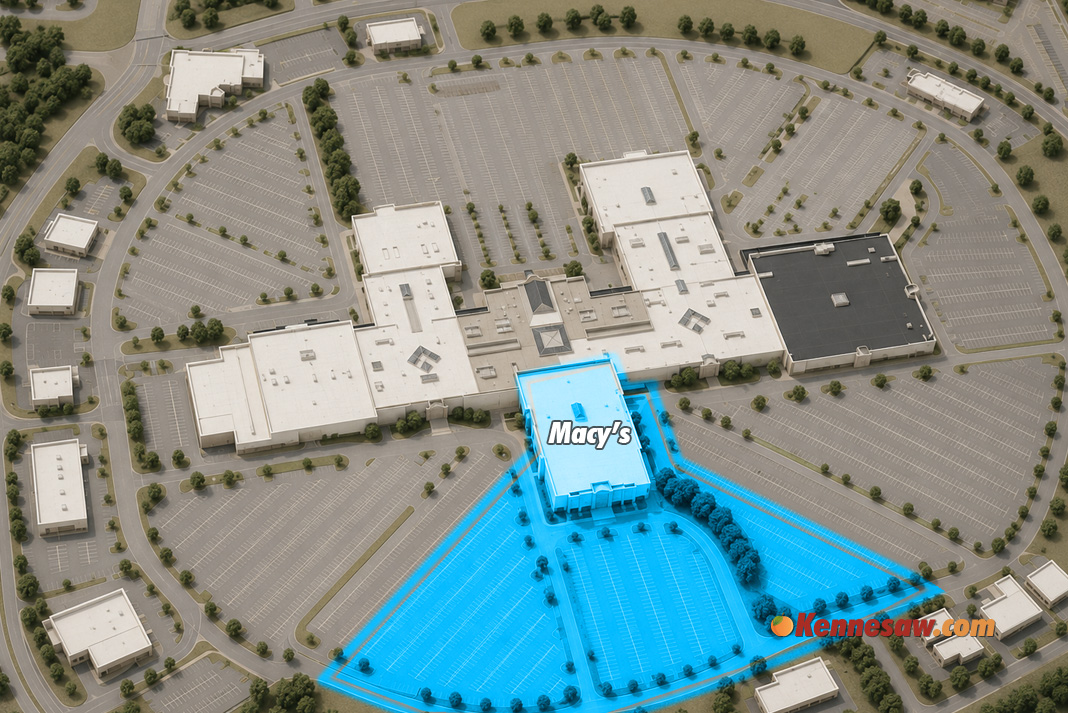
Macy’s also controls a second anchor parcel on the southeast side of Town Center at Cobb. Macy’s has two buildings because the mall originally opened with separate Rich’s and Macy’s stores, and after the chains merged, Macy’s moved its main store into the former Rich’s while converting much of its original building into the Men’s and Furniture store.
This property contains the rare three level building used for the Macy’s Men’s Store, Furniture Gallery, and Furniture Clearance Center. The parcel and associated parking cover about 15 acres.
The southeast building is legally separate from the main Macy’s store on the northwest side. It is also separate from Ardent’s central mall property.
Town Center therefore contains two large Macy’s controlled areas rather than one combined Macy’s tract.
Any redevelopment plan involving the southeast corner would require Macy’s participation, a purchase of the property, or another agreement between the companies.
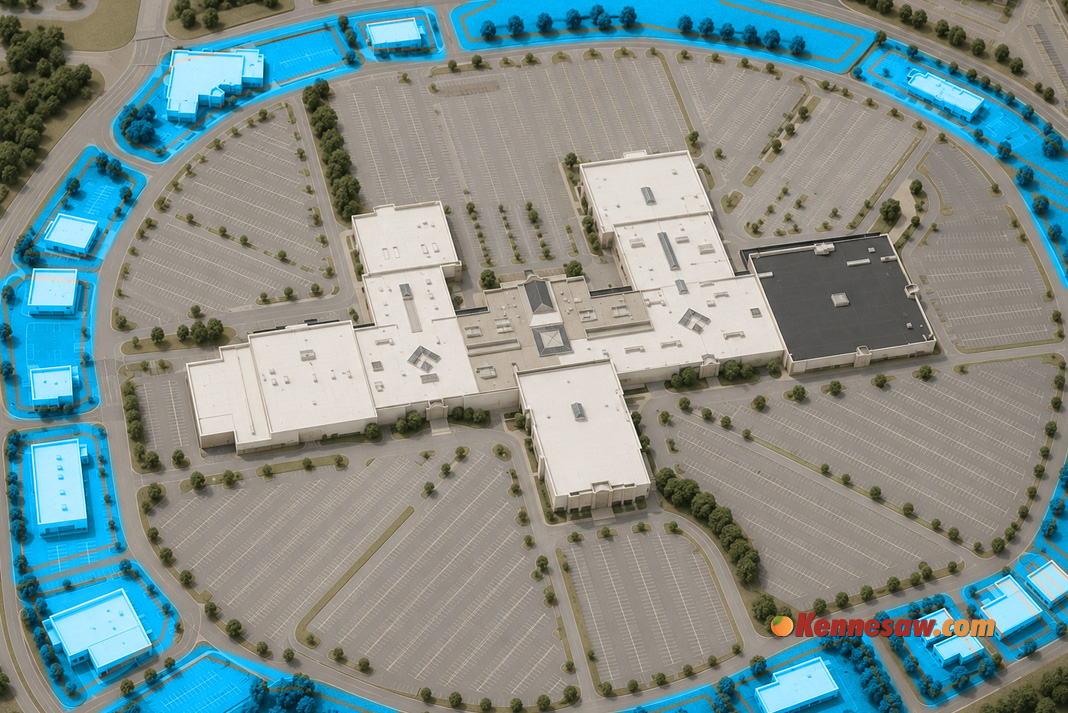
6. Smaller Outparcels, Access Tracts, and Easements
The remaining acreage includes smaller retail parcels, road strips, landscaped buffers, utility areas, and other pieces around the outer ring road.
Ownership varies from parcel to parcel.
These smaller tracts may appear minor on a map, but they can affect redevelopment plans. A small parcel near an entrance can influence road access, signage, construction routes, stormwater systems, and the placement of new buildings.
A developer planning a hotel, restaurant, apartment building, or new retail structure may need agreements with multiple property owners before construction can begin.
Approximate Property Breakdown
| Ownership area | Main buildings and land | Approximate acreage |
|---|---|---|
| Core mall property | Concourses, inline stores, food court, former Belk space and general parking | About 42 acres |
| Former Sears property | Former Sears store, Auto Center, and southwest parking | About 13 acres |
| JCPenney property | Two level department store and eastern parking | About 5 acres |
| Macy’s main property | Northwest department store and parking | About 19 acres |
| Macy’s Men’s and Furniture property | Southeast three level anchor and parking | About 15 acres |
| Smaller outparcels and access areas | Peripheral retail, roads, buffers and easements | Remaining acreage |
The acreage figures are rounded estimates. Survey lines, access strips and individually owned outparcels can create small differences when the entire site is totaled.
Town Center at Cobb was built to function as one shopping center, but its legal structure resembles several adjoining properties sharing roads, entrances, parking connections and utility systems.
Those relationships are generally managed through easements and operating agreements. The documents can address vehicle access, pedestrian routes, signs, maintenance responsibilities, utilities and parking rights.
This setup allows different owners to operate beside one another. It also makes a full property redevelopment more complicated.
Ardent can renovate the mall interior, replace vacant indoor spaces, and examine new uses for the former Belk area and parking it owns. It cannot change or demolish Macy’s, JCPenney, or the former Sears buildings.
A plan involving the entire 92 acre site would likely require property purchases, revised access agreements and cooperation among several companies.
What Could Happen Next
Ardent has not released a redevelopment plan for Town Center at Cobb.
There is no confirmed proposal for apartments, an arena, hotels, or complete demolition of the enclosed mall. Those ideas remain possibilities rather than announced projects.
The divided ownership does not prevent major redevelopment, but it makes the process slower and more dependent on negotiation.
Ardent could redevelop its central property in phases while Macy’s and JCPenney remain open. It could buy additional parcels later or sell portions of its land to residential, hotel, restaurant, or retail developers.
The former Sears owner can pursue a separate project at the same time. That creates the possibility of two major redevelopment efforts moving forward beside each other, each with its own owner, financing, and schedule.
The two groups may eventually coordinate on roads, traffic flow, utilities and shared improvements. They could also pursue entirely different concepts on adjoining land.
Town Center at Cobb may appear to be one mall from the interstate. Legally, it is a collection of major properties connected by decades of shared access agreements.
Any future plan begins with that ownership map. Before a developer can redraw Town Center, it first has to identify which pieces it actually owns.